

Stakeholders in Uganda’s health sector have called for stronger accountability, improved supply chain management and sustainable financing to ensure that essential medicines and health supplies reach the people who need them.
The call was made during the 2nd National Essential Medicines and Health Supplies (EMHS) Synergy Summit 2026, held at Speke Resort Munyonyo on Thursday, 12 November 2026. The summit brought together key stakeholders to discuss challenges and identify practical solutions for improving access to medicines and health supplies across the country.
Addressing participants, Dr. Moses Kamabare, General Manager of National Medical Stores (NMS), welcomed stakeholders and expressed hope that the discussions would generate meaningful recommendations to strengthen the country’s medicines supply system.
“It is an honour and privilege to see all of you here. I hope our discussions will be fruitful and that we shall come up with good recommendations on how we can move forward,” he said.
He noted that the availability of medicines remains one of the biggest concerns among Ugandans, frequently featuring in conversations between political leaders and local communities.
“When political leaders are seeking public support, the issue of medicine availability always comes up as a concern raised by local communities,” he observed.
Dr. Kamabare emphasised the need to explore better ways of ensuring that medicines are readily available to the people who need them, while making better use of the resources already available.

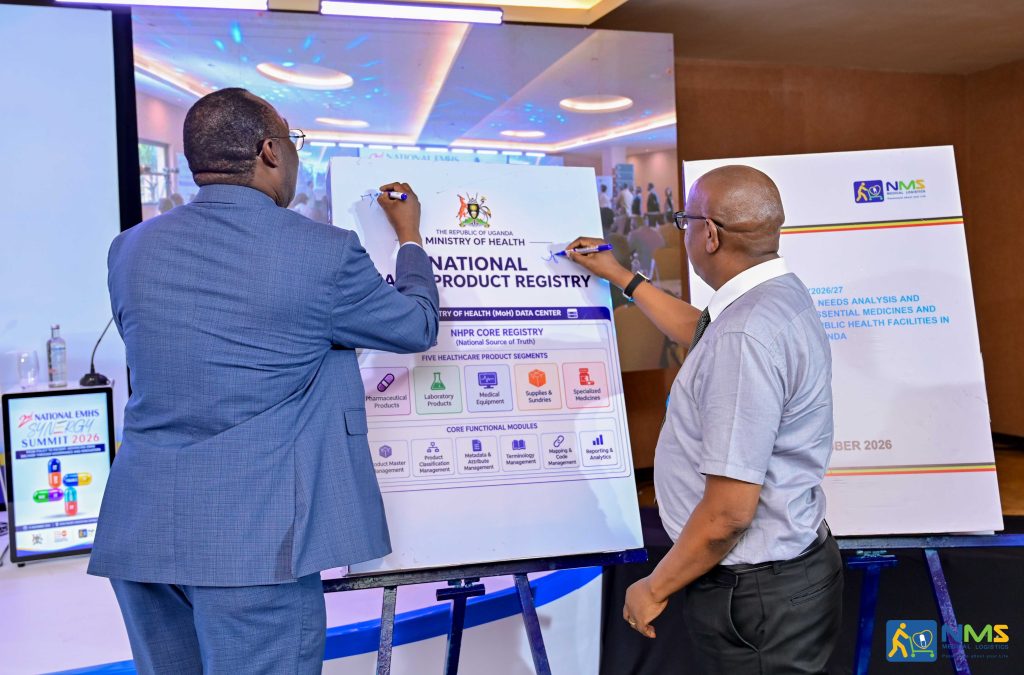
He also highlighted medicine diversion as one of the challenges affecting access, noting that some medicines reported to be unavailable are sometimes diverted.
“While there are concerns that medicines are not available, what is actually happening on the ground is that, at times, medicines are diverted. Our task is to minimise these cases and address similar challenges,” he said.
He acknowledged the progress made in improving access to essential medicines but noted that more work remains to be done.
“We have come a long way, but we still have a long way to go,” he added.
Representing the Ministry of Local Government, Mr. Charles Magumba, Commissioner for Urban Administration, emphasised the critical role of local government leadership in ensuring that health services reach communities.
“Through district leadership, we ensure that services reach our communities. As we continue to invest in health service delivery, we must also safeguard the delivery channels all the way to the patients,” he said.
Mr. Magumba noted that the benefits of medicines depend not only on their availability but also on how they are managed at health facilities.
“Medicines can only achieve their intended benefits when there is proper storage, handling and administration,” he emphasised.
He called for stronger district and health facility supply systems, noting that the summit provides an important opportunity to identify supply chain gaps and strengthen accountability.
“This summit helps us identify supply gaps and discuss how best we can ensure accountability,” he added.


Dr. Joseph Okware, Director of Health Services Governance and Regulation at the Ministry of Health, thanked the organisers for bringing stakeholders together to agree on practical actions to strengthen access to essential medicines and health supplies.
He emphasised that the performance of the medicines supply chain should not only be measured by the quantities delivered to health facilities but also by the quality and appropriateness of the medicines supplied.
“Our work is not only measured by the medicines delivered to health facilities, but also by the quality of those medicines,” Dr. Okware noted.
He explained that although Government provides funds for the procurement of medicines, challenges remain in ensuring that the right medicines reach the right facilities.
He raised concern about health facilities procuring expensive medicines that may not necessarily address the most pressing health needs of their communities.
“Facility leaders must take responsibility for understanding the health issues that need attention in their communities,” he urged.
Speaking on behalf of the United Nations Population Fund (UNFPA), Ms. Christine called for a shift towards sustainable domestic financing of essential medicines and health supplies, cautioning against continued dependence on external donors.
“The era of relying on external donors for essential medicines and health supplies must come to an end. If we continue depending on donors, we risk damaging the sustainability of our health systems,” she said.
She called for a shift towards more sustainable healthcare systems that make essential services accessible to everyone, including women seeking family planning services.